Sonoma wedding venues,
through a filmmaker’s eyes.
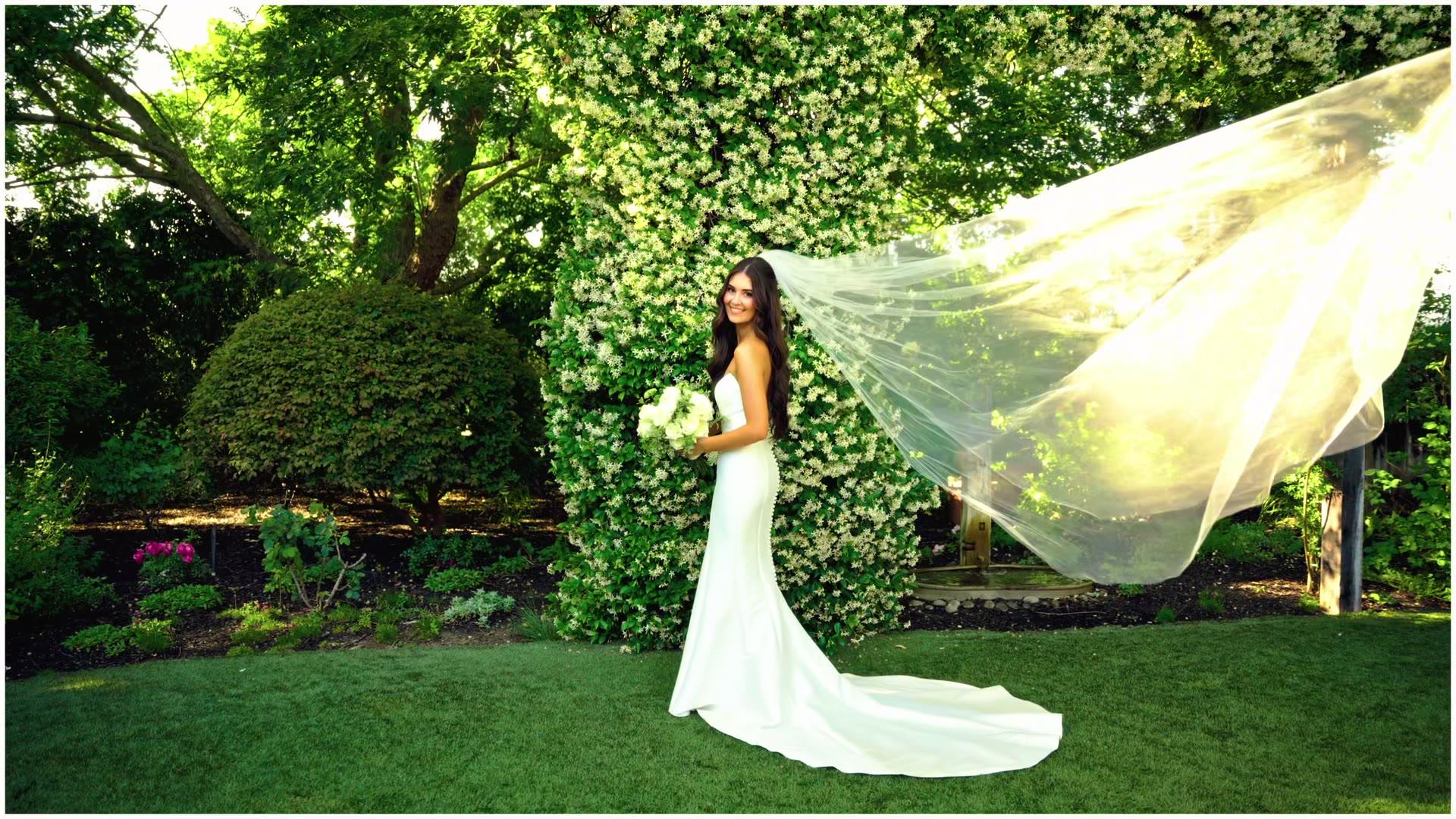
Sonoma is a county of many countries. In a single day you could stand among the stone ruins of a nineteenth-century winery, in a cave cut through ancient lava, in a grove of orange trees beside an old house in Healdsburg, and on a meadow that runs without a fence into the Pacific. Each gives a wedding film a different light, a different sound and a different hour.
This is a companion to our notes on Napa Valley and on Sacramento and the foothills: the same filmmaker’s eye on different country. Every fact about a place comes from the place itself or from a source listed at the end. The opinions are ours.
Not every winery can say yes.
As in Napa, a beautiful winery in Sonoma is not always a place that can host a wedding. Kendall-Jackson’s wine estate and gardens in Fulton, for one, says plainly that it is not permitted to host weddings. Before you fall for a winery, ask it how it is able to host yours.
Some of the places that can say yes also decide who works there. Jack London State Historic Park asks couples to choose their vendors from its preferred list; a vendor not on it can be considered, for a fee, but only before it is contracted. Kunde requires both a wedding planner and a professional caterer. If you already have a filmmaker or a photographer in mind, ask about this first, before anything is signed.
Evening hours and the western hills.
Many venues here keep a fixed evening. Jack London’s winery ruins host evening events from five to ten. Kunde reserves its event space from four to ten. Buena Vista, according to the county’s tourism board, gives a wedding the estate from five to ten, and the Fairmont in Boyes Hot Springs includes up to six hours of event time.
The light we hope for comes in the last hour before sunset, low and warm and kind to skin, and in the half hour after, when the sky keeps a little color. Our advice is the same as anywhere: begin the ceremony about an hour and a half before sunset. In midsummer the sun goes down late in a five-to-ten evening, so the best light belongs to the portraits and the start of dinner. In autumn it goes down much earlier, and a ceremony near the start of the evening is already in the right hour. For the time on your date, NOAA’s solar calculator (opens in a new tab) is a good guide.
The calendar is not the whole story. In the Sonoma Valley the sun sets behind the hills to the west, and a lawn on the valley floor can fall into shade well before the time in the table. Ask the venue when the sun leaves the ceremony site, or walk it at that hour in the month of your wedding.
Mustard in spring, color in the fall.
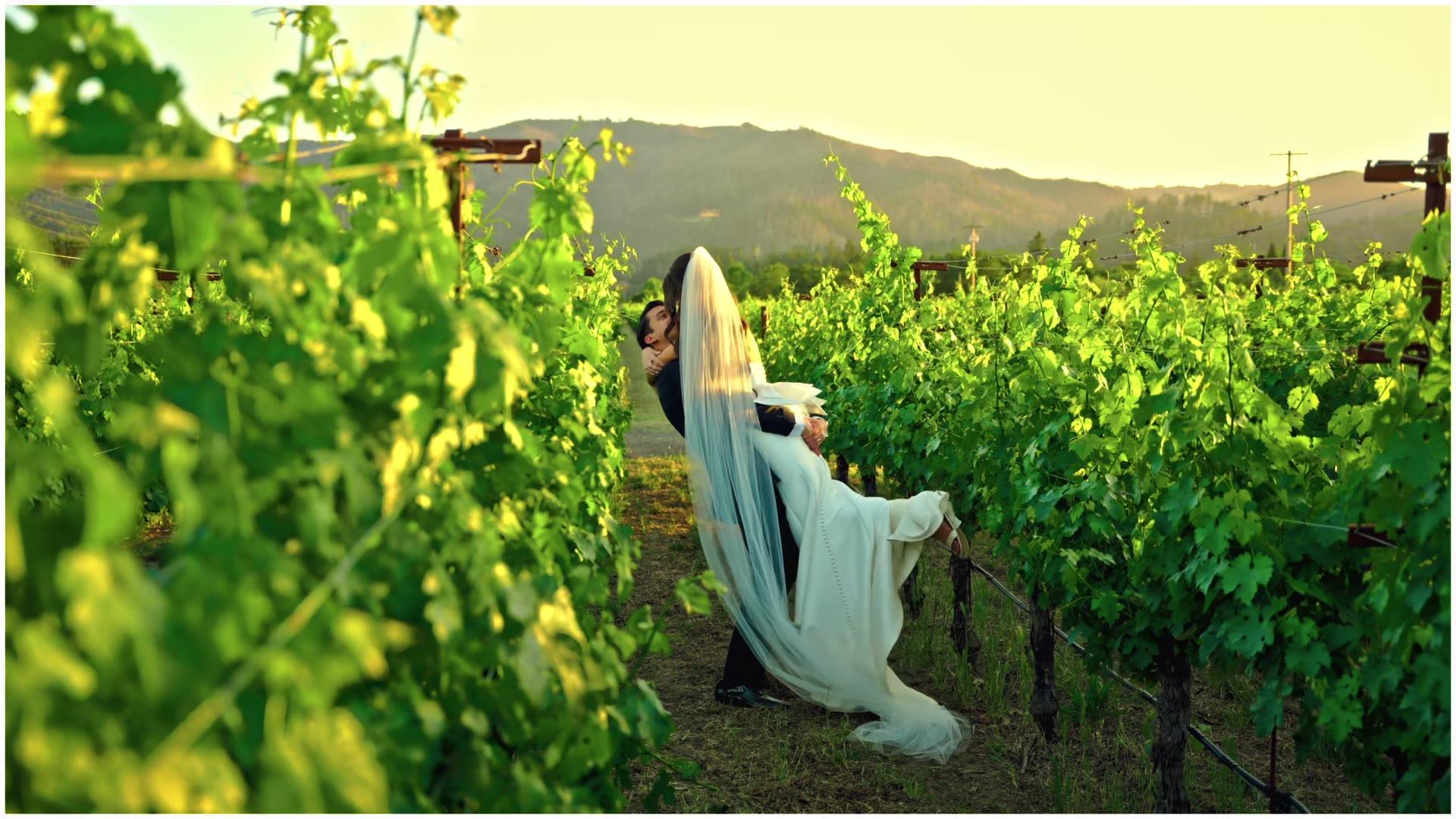
Spring here has its own color. Gundlach Bundschu speaks of springtime weddings with a backdrop of yellow mustard fields. By autumn the leaves turn, and Sonoma County Tourism gives the season of fall color as running from early September through late November. For a film, both are a gift: color in the frame that nobody had to bring.
Some spaces keep a season of their own:
- Kunde’s Boot Hill: April to October only.
- Buena Vista’s fountain courtyard: spring to fall.
- The Sea Ranch Lodge’s meadow glamping: May to October.
- Paradise Ridge: the tasting room may keep shorter hours from May to October because of private events.
The weather between the valleys and the coast is not one thing. Montage Healdsburg puts it in its own words: Sonoma’s coastal influences provide comfortable weather and cool California evenings. Ask each venue what an afternoon in your month is like, and where the day moves if the weather turns. MacArthur Place, for instance, has an indoor ceremony space for fewer than 50 guests.
The town and its old estates.
MacArthur Place (opens in a new tab)
Founded, in the hotel’s words, well over a century ago as a family estate, vineyard and working ranch with prized trotters; the Burris House, the original residence, dates from the 1860s. Ceremonies on the West Lawn, among gardens and historic architecture, for up to 100; in the property gardens, shaded by oak and redwood, for as few as two and up to twenty. Its salons seat 80 with a dance floor, or hold 125 without one.
A garden ceremony for twenty is one of the most intimate things we film: every face is close, and every word carries. The gardens have water features, so we would ask whether they can rest during the vows. Valet parking is limited and the hotel asks guests to share rides, which also keeps the arrival calm.
Buena Vista Winery (opens in a new tab)
Built in 1857 by Agoston Haraszthy, listed on the National Register of Historic Places and a California Historical Landmark. Since 2011 it has belonged to the Boisset Collection, which reopened the original hand-dug caves after reconstruction; the visitor center is in the old press house. Weddings in the caves for up to 40, in the fountain courtyard for up to 225, or indoors in the Wine Tool Museum for up to 175.
Hand-dug caves give a small wedding the stillness of a chapel. In the courtyard, as with any fountain near the vows, we would ask whether the water can be quieted. And with the evening beginning at five, the season decides the light: in early autumn the ceremony meets the sun already low; in midsummer the best of it comes later, closer to dinner.
Gundlach Bundschu (opens in a new tab)
A family-owned, organically farmed winery where, in the winery’s words, six generations have celebrated on Rhinefarm. It welcomes weddings year-round, and speaks of spring weddings against yellow mustard fields and autumn ones among the turning leaves.
Mustard in bloom between the rows is one of the loveliest spring sights a film can hold: a field of color behind the couple, without a flower bought for the day. On an estate this size, ask early where the ceremony stands, and how far it is from the portraits and the reception.
Fairmont Sonoma Mission Inn & Spa (opens in a new tab)
The resort describes itself as the backdrop for countless weddings for nearly 100 years. More than 27,000 square feet of event space lies beneath century-old sycamores and oaks: the Creekside Lawn for up to 200, shaded by redwoods and eucalyptus a century old; the Pavilion for 250, with large windows, a vaulted ceiling and wrought-iron chandeliers; the Sonoma Valley Room, with its fireplace; and the Kenwood Ballroom, where the celebration can go on until one in the morning.
Of the lawns, we would look first at the Creekside: tall old trees make the moving shade a filmmaker hopes for on a warm afternoon. The Breezeway Lawn is, in the resort’s words, the first space you see when you enter, so we would ask how arrivals pass it during the vows. In the Pavilion, big windows keep the room alive as the evening comes on.
Stone ruins, and caves in the lava.
Jack London State Historic Park (opens in a new tab)
The ruins of the Kohler and Frohling winery, now an open-air courtyard at the base of the London Cottage, overlooking vineyards and the Sonoma Mountain range, for up to 250. Evening events run from five to ten, and the music ends at ten sharp. Guests walk five minutes from the parking along a gravel path, with a golf-cart shuttle for those who need it. Nothing may be fixed to the old walls or hung from the trees.
Stone walls with only the sky above them are rare, and they give a film a sense of time that no decoration can. After dark the only light is the light you bring, and the park requires lighting along the paths, so we would plan the evening’s lamps with your planner, warm and low, well before the day. The ruins have power of their own; elsewhere in the park a generator is needed, and that is a sound to keep far from the vows.
Kunde Family Winery (opens in a new tab)
An estate of 1,850 acres, with soils that, by the winery’s account, have been planted continuously since 1879. Boot Hill, on the slopes of the Mayacamas Mountains and framed by valley oaks, holds up to 250 from April to October; Winemaker’s Plaza, beneath a canopy of pecan trees, holds 200; the Magnolia Room, built in 2024, 100. The caves run more than half a mile through volcanic lava flows five million years old, with a dining room 175 feet beneath a Syrah vineyard, for up to 50.
Boot Hill looks out in every direction over the estate, and to the west, across the valley, toward the evening sun, which will drop behind the far hills before the time on the calendar. That last hour on a hillside, with the valley falling away behind a couple, is worth planning a day around. The cave dining room is its opposite: no wind, no traffic, every toast heard to the last word.
Old gardens and northern vines.
Luther Burbank Home & Gardens (opens in a new tab)
The Greek Revival house where Luther Burbank lived from 1884 to 1906, now a city park and a California Historical Landmark, part of it also a National Historic Landmark. The greenhouse he built in 1889 is here, and he lies beneath a Cedar of Lebanon in the garden. The gardens are available for weddings and other small events.
A small wedding in the garden of a man who spent his life on plants gives a film texture in every frame: leaf, bark, blossom. It is a garden in the middle of a city, so we would listen at the hour of the vows for the streets around it.
Paradise Ridge Winery (opens in a new tab)
An estate of 155 acres that has hosted events for over 30 years, with two indoor and four outdoor spaces for up to 250. The Poetry Terrace, which the winery calls its most popular outdoor location, has a bandstand and a raised altar; the Veranda is the place for sunsets, beside the LOVE sculpture; the Nagasawa Room is named for Kanaye Nagasawa, a samurai from Kagoshima and a Sonoma winemaker.
A raised altar is a quiet gift to a film: the couple stand a little above their guests, and the vows can be framed without anyone standing in the aisle. A winery that sets aside its veranda for sunsets is telling you where the last half hour of the day belongs.
The Madrona (opens in a new tab)
Built in 1881 as a gabled private residence during the Aesthetic Movement, and redesigned by Jay Jeffers, for weddings of up to 150. The South Lawn holds 150, an orange grove about 40 seated; dinner is on the Palm Terrace for 80, or for 20 in the muraled Drawing Room.
An orange grove for forty guests keeps everyone close, and the fruit catches the late light. A painted room by candlelight is one of the most beautiful places a small dinner can be filmed: the walls glow, and nothing needs to be added.
Montage Healdsburg (opens in a new tab)
A resort with views of Mount St. Helena and Alexander Valley, among heritage oaks. Its outdoor spaces run from the Grand Lawn for up to 600 to the Vineyard Lawn for 50, completely encircled by vines; the Oak Lawn, for 250, is offered, as the resort puts it, to exchange vows at golden hour, and the Courtyard, for 100, has a heritage live oak. Indoors, the Grand Ballroom has wine-barrel-inspired ceilings, and the Gallery Ballroom handblown glass lighting and herringbone floors.
A lawn ringed by vines is a rare thing: every direction is a background, so the vows can face whichever way the light is kindest. The Vista Lawn has a fire feature, and firelight on faces after sunset is warm in a way no lamp quite matches.
Soda Rock Winery (opens in a new tab)
A winery in Alexander Valley that hosts weddings year-round, indoors and out, with views of the vineyards, for up to 75. Its county listing notes limitations on events.
Seventy-five guests among the vines is a size we love to film: enough to fill a frame, few enough that everyone stays close. Ask early what the limitations mean for your day: the hours, the music, the number of guests.
The Pacific, and shelter from it.
The Sea Ranch Lodge (opens in a new tab)
About 100 miles north of San Francisco, inside a community of 7,000 acres: roughly two hours’ drive from the city and an hour and a half from Healdsburg. Barn Meadow North, for 200, is a sheltered meadow beside the historic Black Pointe Barn; Barn Meadow South, for 200, has no fencing, so the horizon runs straight into the sea. The Courtyard holds 200 for a reception, sheltered from the Pacific elements, and the Dining Room, restored in 2023, seats 80.
Here the choice is between shelter and the open horizon, and both are beautiful. An unfenced meadow running to the sea gives a film its widest frame and its most exposed one, so we place small wireless microphones on the couple and the officiant, and keep the meadow by the barn in mind as the plan for a windy afternoon.
Timber Cove Resort (opens in a new tab)
A resort on the Sonoma Coast with 46 rooms, meeting rooms, two large decks and an events lawn, for weddings of up to 120.
With rooms on site, guests can stay where the evening ends instead of driving the coast road after dark, and a wedding where nobody has to leave early films as one long, unbroken evening. On decks open to the Pacific, we would ask which of the indoor rooms is ready if the weather turns.
What Sonoma adds to the list.
For a film, both are a gift: color in the frame that nobody had to bring.
The questions we would ask any venue are at the end of our Napa notes. Sonoma adds a few of its own:
- Are you permitted to host weddings, and how?
- Is there a preferred vendor list, and can a filmmaker or photographer not on it be considered, and by when?
- What are the hours of the evening, and where does sunset fall within them in our month?
- When does the sun go behind the hills to the west of the ceremony site?
- Is there power where we will be, or will a generator be needed, and how far from the vows can it stand?
- Who provides the lighting after dark, along the paths and in the space itself?
- Are there fountains or water features near the vows, and can they be quieted?
- On the coast, where is the sheltered space if the wind comes up, and where will guests sleep?
And one more, for your photographer and for us: walk the site together at the hour of your ceremony, in the season of your wedding. It is the most useful hour in planning a film, and it is part of how we work.
If you are choosing between places now, we are glad to talk them through with you, whether or not we film your day.
We’d be honored
to film your day.
If our work resonates, we would love to hear about your day.
Begin the conversation