A wedding day that films beautifully,
built around the light.
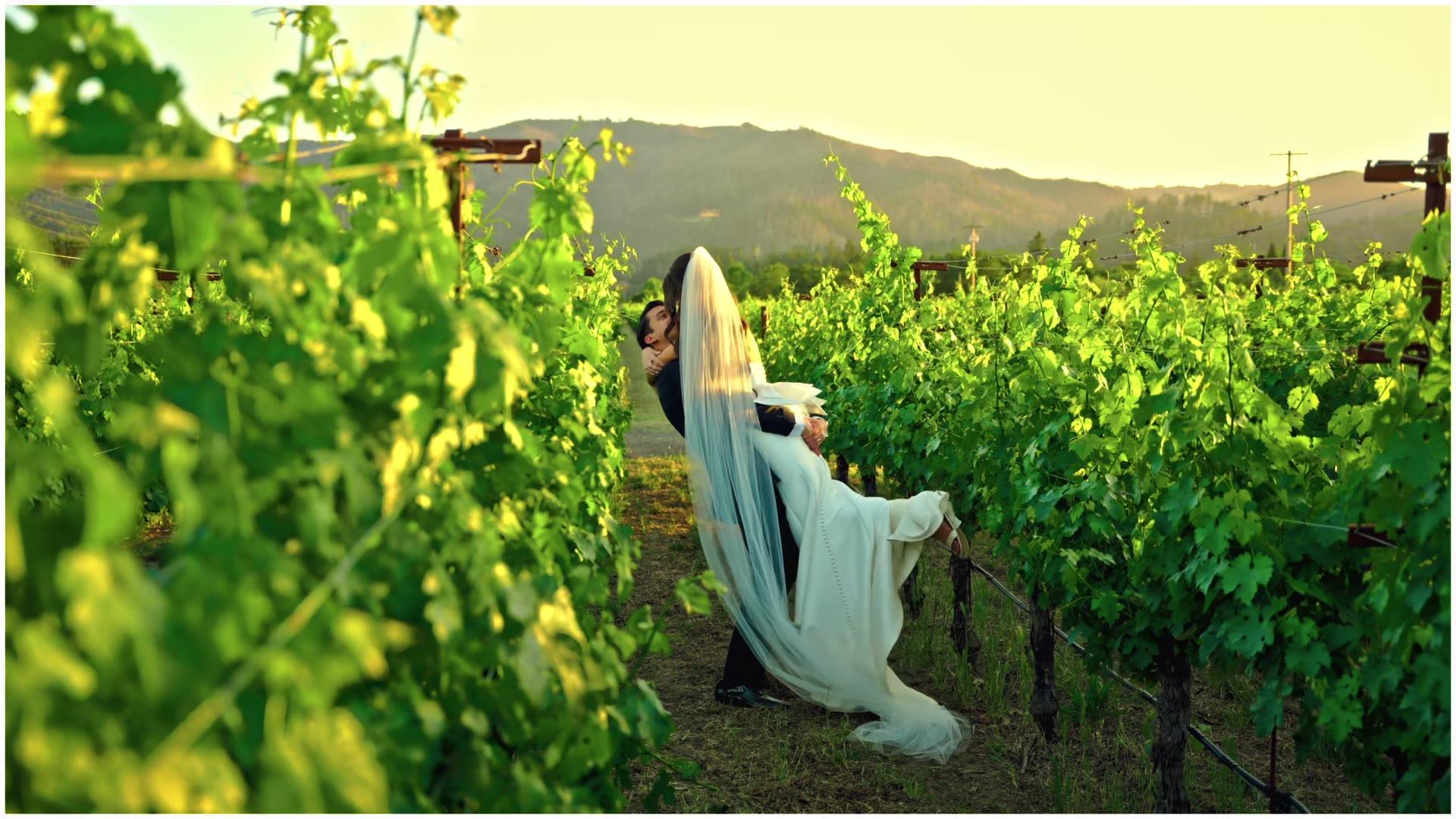
Most of what a wedding film looks like is decided months before anyone holds a camera, on a single page: the timeline. Move the ceremony forty minutes and the vows fall either in hard, squinting sun or in low, warm light that is kind to every face. Move the portraits twenty minutes and they happen either in the best light of the day or in the dark.
These are notes on building that page around the light: what golden hour actually is, when the sun sets through the season in Northern California, and how we would place the first look, the ceremony, the portraits and the last of the sun. They sit beside our notes on Napa Valley’s venues and on Sacramento and the foothills. The times are calculated for Napa in 2027 and checked against published tables; the sources are listed at the end, and the practice is our own.
What we mean by golden hour.
Sunset, in the astronomer’s sense, is the moment the top edge of the sun touches a level horizon. It is a calculation, and an honest one says it can be off by a minute or more even on perfect ground. Hills on the horizon change it far more, and no published table knows about the hills behind your venue.
Golden hour is the stretch before sunset when daylight turns redder and softer than it is with the sun high. Cinematographers often call it the magic hour. The word hour is a figure of speech: the light is set by how high the sun stands, not by the clock. One common definition runs it from the sun at six degrees above the horizon to four below. In Napa, the sun falls from six degrees to the horizon in about thirty-five minutes in spring and autumn, and closer to forty in summer and winter.
Why it matters for a film is simple. Low sun lowers contrast: shadows under the eyes soften, highlights on a white dress stop burning out, and skin looks like skin. After sunset comes civil twilight, about half an hour in Napa, when the sky still lights the world and lamps are rarely needed. Then the blue hour, without shadows, and then the night, when every frame needs light we bring or the venue gives.
Sunset, month by month.
Sunset in Napa moves by nearly four hours on the clock across the year. Times for 2027, on local clock time:
- January: 5:00 in the evening on the first, 5:13 by the middle of the month.
- February: 5:32 at the start, 5:47 by mid-month.
- March: 6:02 at the start; 7:16 by the 15th, once the clocks have changed.
- April: 7:32 at the start, 7:46 by mid-month.
- May: 8:01 at the start, 8:13 by mid-month.
- June: 8:27 at the start, 8:34 by mid-month.
- July: 8:37 on the first, 8:32 by mid-month.
- August: 8:19 at the start, 8:03 by mid-month.
- September: 7:39 at the start, 7:17 by mid-month.
- October: 6:52 at the start, 6:31 by mid-month.
- November: 6:10 on the first; 4:57 by mid-month, once the clocks have changed.
- December: 4:49 on the first, 4:50 by mid-month.
The latest sunset of the year, 8:37, comes from about the 24th of June to the 2nd of July, and the earliest, 4:49, from about the 30th of November to the 13th of December. Neither falls on a solstice; the difference between clock time and sun time moves them a week or so away.
Two weekends need particular care. Daylight saving begins on the second Sunday in March and ends on the first Sunday in November. In 2027, the sun sets at 6:14 on Saturday the 13th of March and at 7:15 the next day; at 6:04 on Saturday the 6th of November and at 5:03 the next day. A timeline copied from the week before can be an hour wrong.
Across wine country the differences are small: on the longest evenings Sonoma, Calistoga and Healdsburg see the sun go a minute to three after Napa. Farther out they grow. On the 21st of June, sunset is 8:36 in Napa, 8:45 in Mendocino, 8:29 in Carmel-by-the-Sea and 8:29 at South Lake Tahoe. Always work from the times for your own town.
An hour and a half before the sun goes.
If we could ask one thing of a timeline, it would be this: begin the ceremony about an hour and a half before sunset. A ceremony of twenty or thirty minutes then ends as the light begins to warm, the recessional and the embraces after it fall in good light, and the best of the evening is still ahead for the portraits. In Napa that hour moves a long way through the year:
- Early May: a ceremony at about 6:30.
- June and early July: about 7:00, the latest of the year.
- Mid-August: about 6:30.
- Mid-September: about 5:45.
- Mid-October: about 5:00.
- December: about 3:20, the earliest of the year.
Two things change the arithmetic. The first is the ground. The Napa Valley floor lies between the Mayacamas to the west and the Vaca Mountains to the east, and on the floor the sun leaves a lawn behind the western hills before the time in any table. How much earlier depends on the site, so we would walk it at the hour of the ceremony, in the month of the wedding, or check it with a sun app that knows the terrain.
The second is direction. The sun sets well north of west in June, at a bearing of about 301 degrees, due west at the equinoxes, and well south of west in December, at about 240. That decides which way the vows should face. Facing the low sun, the couple are lit full in the face and squint; with it behind them, they are edged in gold and their faces rest in soft light, which is usually what we hope for. It is worth knowing which way the ceremony faces long before the chairs are set out.
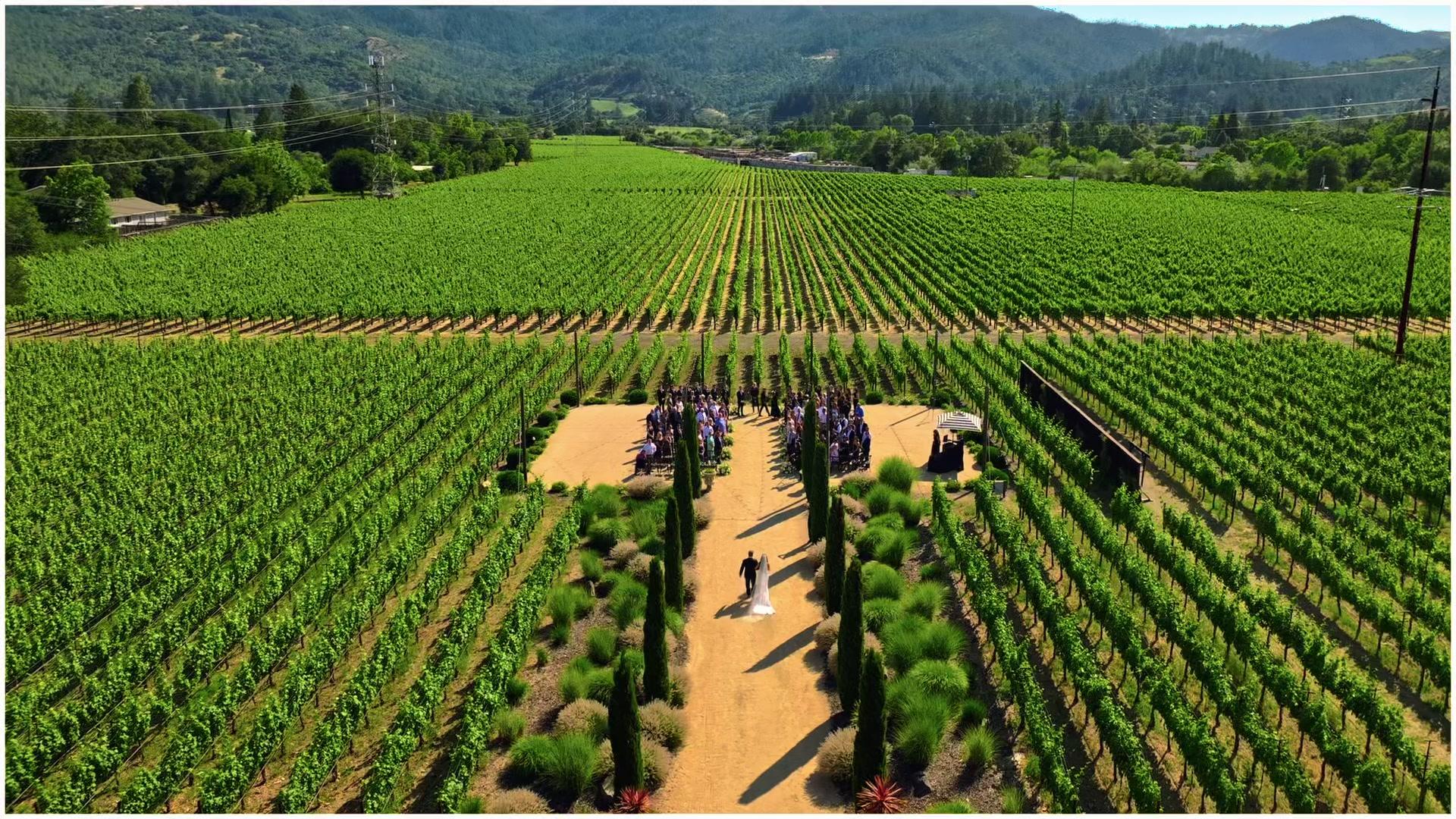
Before the vows, in the shade.
A first look belongs to the hours before the ceremony, which means it usually falls in the light we would least choose: high afternoon sun in summer, midday in winter. We would rather not fight that light. We look for open shade, under a deep porch, a big tree, the shadowed side of a building, where faces are evenly lit and nobody has to squint at the person they are seeing for the first time that day.
On summer mornings in the valley the sky often helps. The marine layer drifts in from the ocean overnight and usually clears as the day warms, so a morning of getting ready can sit under a soft, even sky that flatters everyone in it.
We film the first look with a small microphone on the partner who is waiting. They are the one who hears the footsteps, who takes the breath, who says the first quiet thing, and those few words are often the truest sound of the day. When they turn, and after the hug, we let the moment breathe. Nobody is asked to look at the camera or to do it again. The minute after the embrace, when the two of them simply stand together, is usually the part of the film people return to.
Give the first look more time than it seems to need: twenty unhurried minutes rather than five, and a few minutes on either side to walk there and back. In December, with a ceremony near 3:20, it may fall around midday; in June, with the vows near 7:00, there is room for it late in the afternoon, when the sun has begun to lower.
Ten minutes while the light holds.
With the ceremony an hour and a half before sunset, cocktail hour opens as the light turns. This is when we steal ten minutes with the couple, no more, a short walk from the guests, while the sun is still above the hills and warm. Ten minutes is enough for a film, because we are not posing, and it is short enough that the couple are back with their guests before anyone wonders where they went.
An example, for the 15th of September 2027 in Napa:
The ceremony begins.
The sun stands ten degrees above the horizon, as the guests reach their first glass.
Our ten minutes with the couple, somewhere in this window.
The sun is six degrees up; golden hour proper begins.
The last half hour of sun.
Sunset.
Civil twilight ends, and the evening needs its lamps.
The same rule puts a ceremony on the 21st of June at about 7:06, with sunset at 8:36, and one in early December at about 3:20, with the sun gone at 4:49. The shape of the evening stays the same; only the clock moves.
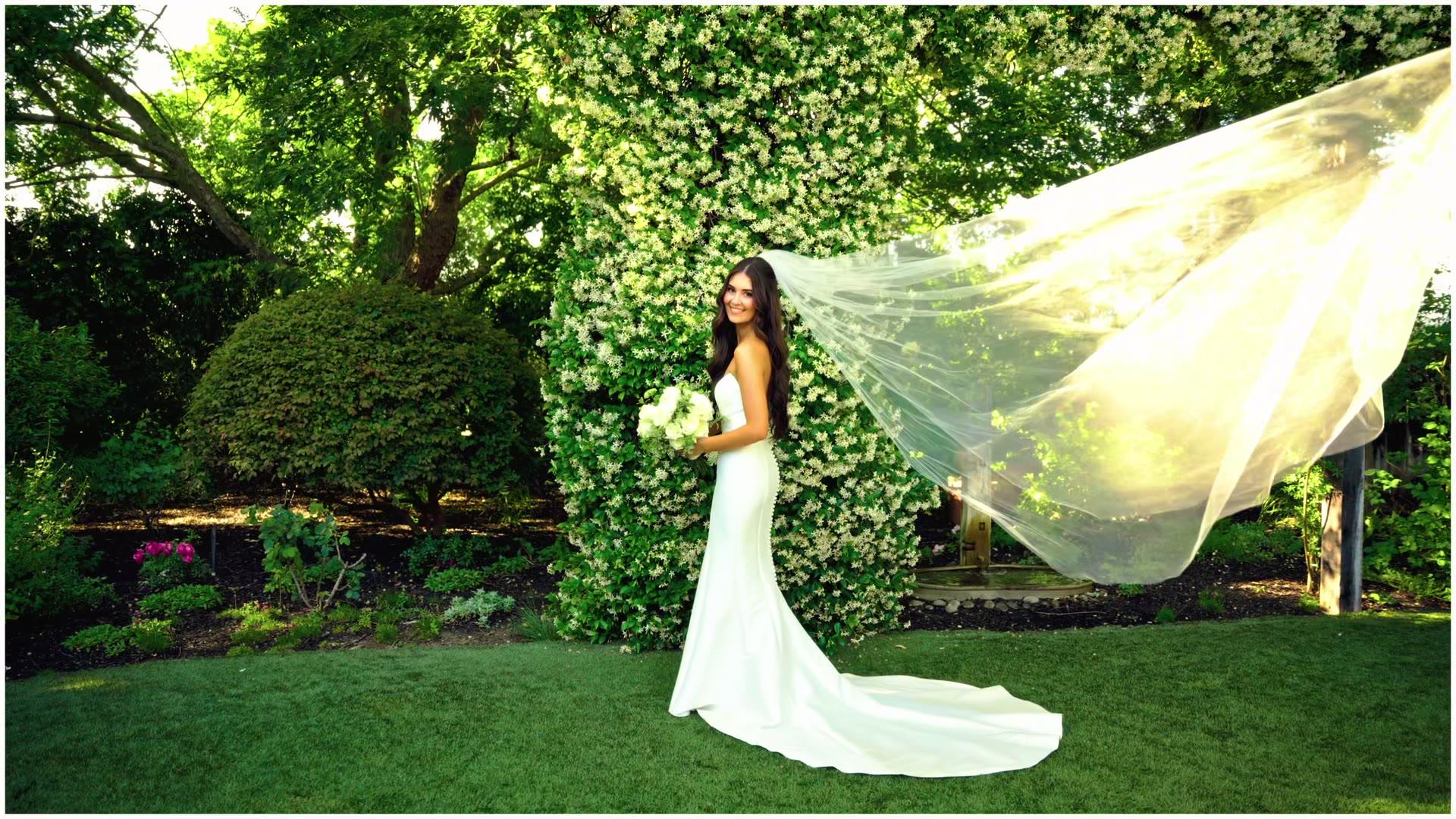
Backlight, stillness and the blue after.
The last half hour of sun is the part of the timeline we guard most closely. It is for backlit walks: the two of them moving slowly away from us or toward us with the sun low behind, hair and shoulders lit at the edges, the vines or the grass glowing between. And it is for one long, still frame of the two of them doing nothing. No direction, no kiss on cue. They stand or sit together and we hold the camera still for a minute or more. In the finished film it is often the quietest shot, and the one that feels most like them.
After the sun goes, there is still about half an hour of civil twilight. The sky keeps its color, the shadows go, and the vines turn blue. A few minutes outside at the start of it, while the guests settle, is often enough for a final frame against the evening.
In the finished film it is often the quietest shot, and the one that feels most like them.
Then dinner, which we never film. Nobody wishes to be remembered mid-bite, and it is the one hour of the evening that belongs entirely to the people at the table. We put the cameras down and return for what follows. In June and early July, when the sun sets after 8:30, the last half hour can fall in the middle of the meal; plan for that, by serving dinner after the sunset, or by leaving room between courses for the couple to step out for twenty minutes.
Warm days, cool evenings and wind.
At Napa County Airport, at the cooler south end of the valley, average highs run near 80°F from June to September, and the hottest day of each of those months averages close to 98°F. Up-valley in Calistoga summer days can pass 100°F. The evenings fall a long way: average lows near 51°F in June and September and 46°F in October. A ceremony timed to the falling sun spares everyone the worst of the heat, and the evening after it often wants a wrap.
Carneros, near San Pablo Bay, rarely sees summer highs above 80°F and is cooled by fog and breezes off the water. Toward Sonoma, the Petaluma Gap carries afternoon winds of roughly eight to twenty miles an hour from late spring into early autumn, and they pull the fog in behind them. Wind is the enemy of quiet vows, which is why we place small wireless microphones on the couple and the officiant, and why we would always look for a sheltered ceremony site as well.
On the coast, the summer pattern runs the other way from the valley: the marine layer pulls back toward the sea by noon, and by late afternoon the wind rises and the fog returns through gaps in the hills, sometimes before sunset. In San Francisco the warmest, clearest months are usually September and October. Weddings in the Golden Gate National Recreation Area need a park permit whatever their size, applications are taken up to a year ahead, and the park does not permit drones.
Autumn has its own weather. Harvest runs from early August into late October, sometimes into November, with picking often done at night; it gives a film heavy vines and bins of fruit, and the valley its busiest weeks. Rain is rare until October, which averages about three wet days, and November about seven. A few times each autumn, dry Diablo winds raise the fire danger, and PG&E may cut power for days in a Public Safety Power Shutoff. In the week before an autumn wedding, it is worth watching the AirNow Fire and Smoke Map, which changes quickly, and knowing where the indoor plan is.
A note for anyone hoping for aerial frames: drones may fly in the half hour after sunset only with anti-collision lights, may not fly over people without an exception, and need permission from air traffic control in controlled airspace, which includes the airspace around Napa County Airport at the southern end of the valley.
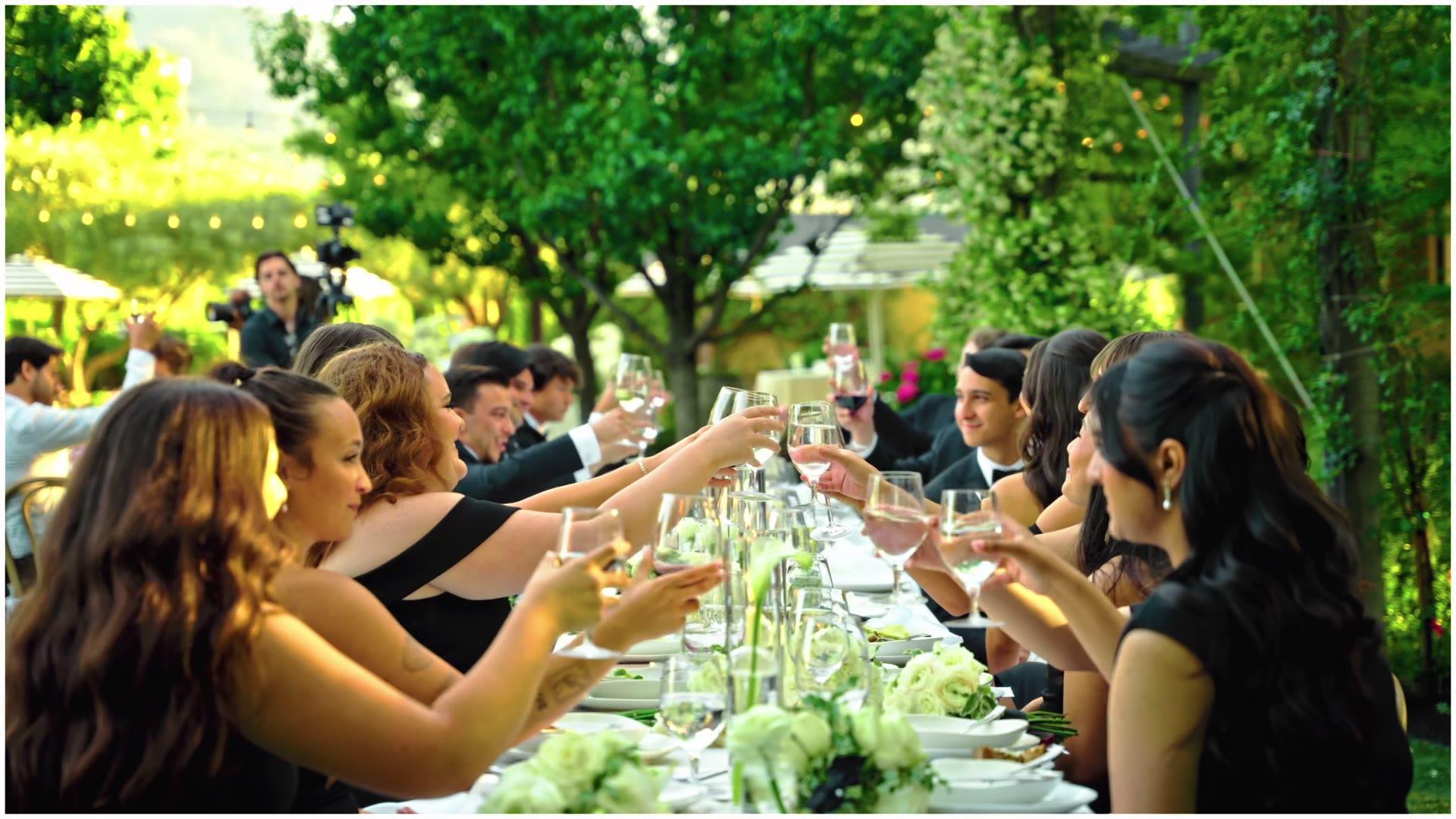
What the light adds to the list.
The questions we would ask any venue are at the end of our Napa notes. Building the day around the light adds a few of its own:
- What time does the sun set on our date, in our town, and does our weekend fall on a clock change?
- When does the sun actually leave the ceremony site, behind the hills or the trees?
- Which way will the vows face, and where will the sun be at that hour?
- Where is the open shade for a first look in the afternoon?
- Is there somewhere a short walk from cocktail hour for ten quiet minutes?
- Does dinner leave room for the last half hour of sun, or does the sun fall in the middle of it?
- Is the ceremony site sheltered from the afternoon wind, and is there an indoor plan for smoke, rain or heat?
- If the venue is on the coast, what happens to the sunset when the fog comes in early?
And the most useful hour in planning a film: walk the site together at the hour of your ceremony, in the season of your wedding, and watch where the light goes. It is part of how we work.
If you are shaping your timeline now, we are glad to talk it through with you, whether or not we film your day.
We’d be honored
to film your day.
If our work resonates, we would love to hear about your day.
Begin the conversation